MY WORK
Trauma systems research
My research examines how harm moves through systems. Drawing on years of work in post-conflict reconstruction, I came to understand trauma not as an individual experience but as something shaped by the structures around it. That lens now drives my work in health systems, where I study how diagnostic processes, institutional design, and clinical pathways can either protect people or cause further harm. The Diagnostic Trauma Index™ is one outcome of this research. So is When the Heart Stops. The work itself is ongoing and spans multiple fields.
University Professor
As an Associate Professor at King's University College, Western University, my academic role grounds everything I produce in rigorous, peer-reviewed scholarship. My work is developed within one of Canada's leading universities, which means it is held to the standards of evidence and accountability that applied research requires. That foundation belongs to all of my work, not to any single project or product.
Human experience and applied insight
I came to this work through direct experience with the aftermath of violence, war, and systemic harm. That background has shaped how I approach research and how I think about what it means to rebuild after trauma. I do not study these questions from the outside. I translate lived and observed experience into frameworks, writing, and tools that are built to be used in the real world.
Health AI and system design
My path from post-conflict reconstruction to health AI is not a departure. It is a continuation. The same questions I have always asked about how systems protect or harm people are now being asked in the context of diagnostic technology and AI-enabled health infrastructure. My research brings a human-centered, evidence-based perspective to a field that urgently needs it.
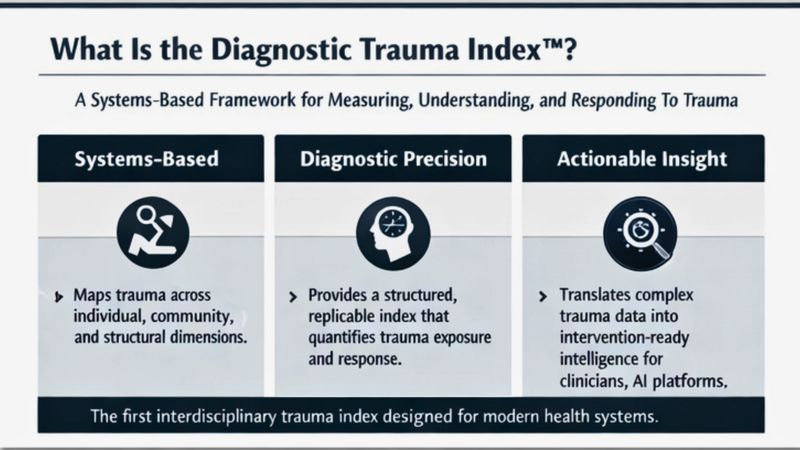
Diagnostic Trauma Index™
The Diagnostic Trauma Index™ (DTI™), is a research-based framework that identifies and measures how diagnostic processes can cause harm. It emerged from my broader work on trauma systems and post-conflict reconstruction, applied to the specific context of medical diagnosis.
The DTI™ offers a structured way to assess whether clinical pathways and institutional design are protecting patients or introducing new sources of harm. It is designed for use by health systems, researchers, and organizations working to build safer, more human-centered care.
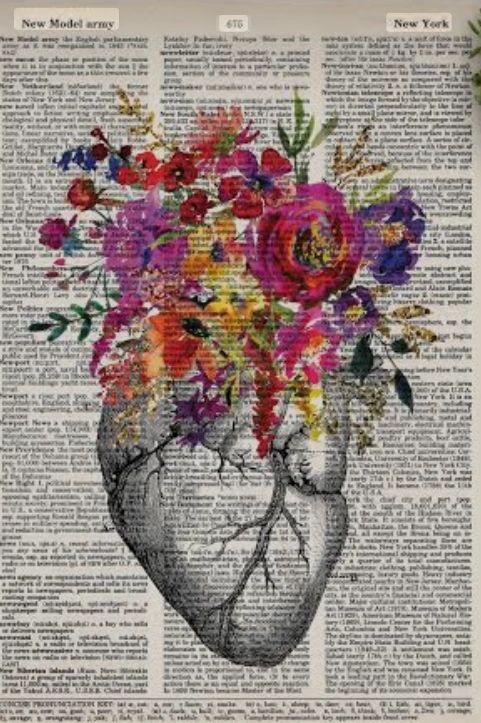
When the Heart Stops
"At 12:48 p.m on Saturday June 9 2018, a heart stopped. It was my husband Jack's."
When the Heart Stops is a work of literary fiction in development, with expected publication in 2027.
The novel follows the aftermath of an out‑of‑hospital cardiac arrest and explores how people navigate rupture, uncertainty, and meaning when the systems around them are strained or failing.